The Neighbour Test: How IC Clubs Keep a Site Documented, Defensible and Open
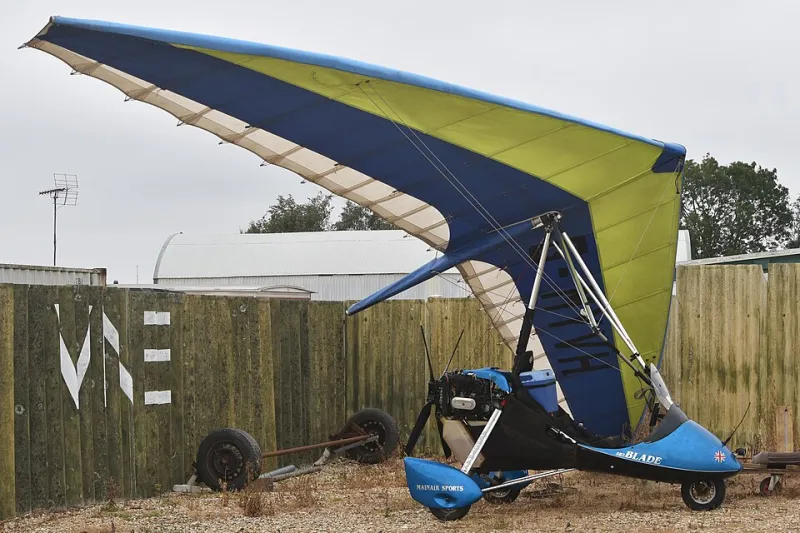
Photo: Alan Wilson, CC BY-SA 2.0, via Wikimedia Commons
A model flying site is a strange kind of property. It is a lease, a planning permission, a landowner's goodwill and a set of neighbours' patience, all held together by a club committee and a mower. For IC clubs, noise is the fault line. It is also the thing most clubs only think about seriously after the first complaint lands.
That is the wrong order. The clubs that keep flying through 2026 and beyond are not the ones with the quietest engines by accident. They are the ones that treat noise as a relationship, not a number, and that can prove what they do before anyone asks.
Noise is a relationship, not a number
A decibel meter is evidence. It is not diplomacy. You can be within your club's limit and still be the club that ruined a neighbour's Sunday lunch. You can also be slightly over a planning condition and survive, if you have a history of listening, logging and fixing. The number matters, but the story around the number matters more.
Start with the obvious: know what your site is allowed to do. Check the planning permission, the landowner agreement and any club rules. If there is a noise condition, it is not a suggestion. If there is no condition, your club should still have a written noise policy. 'We try to keep it quiet' is not a policy. 'IC models are tested at seven metres to a club limit of 82 dB(A), logged by a nominated tester, and re-tested after any engine or silencer change' is a policy.
Test like you mean it
Follow the BMFA noise code and your club's own procedure. In practice, that means a consistent meter, a consistent distance — commonly seven metres — and a consistent test position. Test in the same place, at the same height, with the model on the ground and the engine running as it would in flight. Record the conditions: wind direction, temperature, meter used and who did the test. A noise log with gaps is a gift to anyone who wants to argue that the club is sloppy.
Do not test only the quiet models. Test the noisy ones, and test them again after a silencer repack or a prop change. If a model fails, ground it until it passes. That sounds harsh until you consider the alternative: a club that is known for letting its loudest member do as he pleases.
Silencers, props and the cheapest decibels you will ever buy
A decent silencer and a well-matched prop are cheaper than a solicitor. They are also cheaper than losing a site.
On the silencer side, check the obvious: is it the right size for the engine, is it repacked or serviceable, and is it actually tight? A loose silencer is a noise generator with a mounting bolt. Soft-mounting the engine and making sure the cowl, spinner and pipes are not rattling will also shave decibels that no one enjoys hearing.
Props are subtler. A slightly larger prop turning at lower rpm often moves the same air more quietly, provided you keep ground clearance and stay within the engine's recommended range. A tiny prop screaming at high rpm is a noise complaint waiting to happen. Balance the prop, check the spinner runout and avoid the temptation to lean the engine for that last 200 rpm. A rich-enough setting is quieter, cooler and kinder to the engine.
And throttle management is free. Not every pass needs to be a low, full-throttle statement. Climb at part throttle, keep the noisy bits away from the boundary and save the vertical performance for the far side of the field.
Put the flight line in the right place
Where you stand and where you fly matters as much as what you fly. Put the noisy end of the circuit away from the nearest houses. Use the prevailing wind to keep takeoff and landing noise inside the site rather than over the hedge. If the field is narrow, restrict IC flying to certain patterns or certain hours. Sunday morning is not the time to practise full-throttle low passes near a boundary.
A site map with sensitive receptors marked — houses, farms, footpaths, the village pub — is a useful committee document. It forces the club to see the site as neighbours see it, not as a rectangle with a strip in the middle. It also gives you something concrete to point to when someone asks what the club is doing about noise.
Write it down before anyone complains
Before a complaint lands, have a folder. It should contain the club noise policy, the test log, the site map, the planning conditions, the landowner agreement, the club rules and a record of any changes made because of noise concerns. Keep it current. A folder that was last updated three years ago is not a defence; it is a confession.
Display the rules at the field. Put a summary in the welcome pack for new members. Make it clear that noise compliance is a condition of flying, not a personal preference. If a member refuses to engage, the committee needs to be willing to have the awkward conversation. The rest of the club will thank you.
When a complaint lands
Listen first. Log the date, time, location and what was said. Do not argue on the field, and do not argue on Facebook. If the complaint is about a specific model or a specific time, investigate it properly. If the club is at fault, say so and fix it. If it is not, explain what the club does and offer a visit or a demonstration. Environmental health officers generally respond better to a club that has paperwork and a willingness to cooperate than to one that insists it has always been fine.
And remember the long game. A site is not saved by one good meeting. It is saved by years of small, boring acts: testing the noisy model, moving the flight line, repacking the silencer, logging the result and keeping the neighbours onside when there is no problem to solve. That is the neighbour test. Pass it, and IC flying has a future.