The Wind Over the Hedge: Starting a Club Weather Log That Actually Gets Filled In
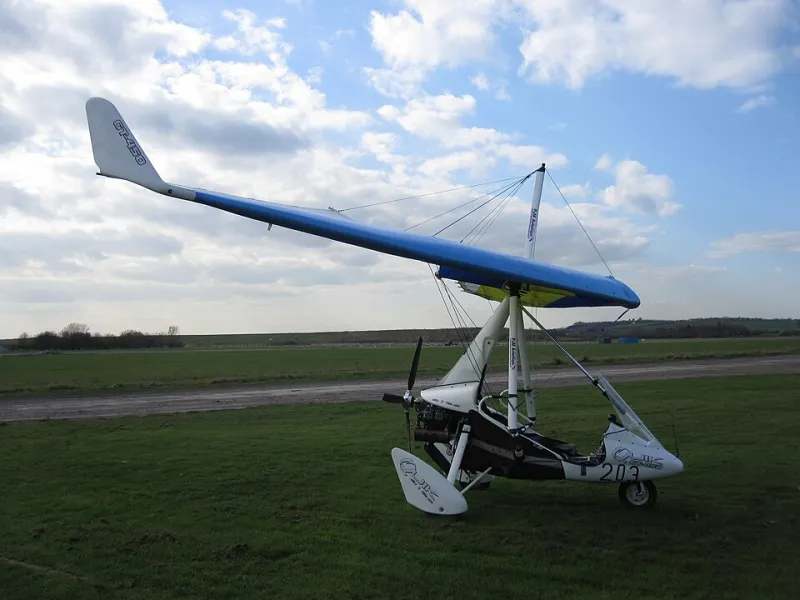
Photo: Mfc, CC BY-SA 3.0, via Wikimedia Commons
Every club has a weather expert. Usually it is the member who stands by the gate, licks a finger, squints at the treeline and announces, “It’ll come round.” He is often right. The problem is that he is also often on holiday, and the rest of us are left prodding a phone screen that promises 11 mph while the windsock is horizontal and the mower shed is making a noise like a trapped tuba.
Forecasts are not useless. They are just not written for your field. The Met Office does not know about the gap in the hedge that turns a friendly south-westerly into a crosswind with a grudge. It has never stood on your strip after three days of drizzle and discovered that the east end is firm and the west end is porridge. It cannot tell you that the rotor off the container arrives without warning at about 2pm when the sun comes over the line of trees.
That is why a club weather diary is worth more than another WhatsApp group debate about whether it is “flyable”. It is not meteorology. It is memory, written down.
Why the App Doesn’t Know Your Field
A generic forecast covers a broad area. Your flying site is a small, awkward, deeply local thing. Trees, hedges, buildings, slopes, a row of caravans, even the mower shed can bend the wind in ways that never show up on a five-day chart. Add in the British habit of delivering four seasons before lunch and you get a field that behaves differently from the nearest town, sometimes differently from the other side of the same field.
A diary captures those quirks. Not in a scientific paper, but in a line or two per session. Over a season, the club stops guessing and starts knowing.
What Goes on the Sheet
Keep it short. If the form takes longer to fill in than the kettle takes to boil, nobody will bother. A clipboard in the container with a pencil on a string is enough. A shared spreadsheet works too, as long as someone actually opens it. The point is consistency, not elegance.
Record the date and time you started flying. Note the wind direction at the strip, not at the car park. Use whatever language the club already understands: “down the strip”, “from the copse”, “over the far gate”, or a simple clock face. Write down the strength in plain terms and, if you want, the Beaufort number. “12 mph” means little when a gust arrives; “enough to make the long grass lie flat” is information everyone can use.
Then add the local detail. Cloud base, visibility, whether it was raining, whether it had rained yesterday. Strip condition: firm, soft, standing water, that patch by the gate that eats wheels. Temperature and wind chill, because cold fingers end more flying days than wind does. And a notes column for the odd stuff: the gust that came over the hedge at 3pm, the thermal that rolled through after lunch, the fact that three models went home with muddy undercarriages.
Finally, write down what happened. Not a full flight report — just “novice session, two deadsticks, one bent gear leg” or “gliders lovely until the cloud broke”. That is the line future members will read with real interest.
Make It Easier Than Not Doing It
A weather diary fails when it becomes homework. So make it part of the routine. The first person to unlock the container writes the opening line. The last person to lock up adds the closing note. If the club has a rota, put “weather log” at the bottom of the list, not at the top. It is a two-minute job, not a committee initiative.
It also helps to give the fields a bit of local flavour. Instead of a blank box for wind direction, print a simple plan of the site with the strip, the trees, the container and the car park marked. Then people can draw an arrow. It is faster than writing, and it produces a visual record that anyone can read at a glance.
If the club prefers digital, a shared spreadsheet with a dropdown for wind direction and strip condition works well. But do not let the perfect system stop the simple one. A soggy notebook in a plastic wallet is better than a beautiful database nobody updates.
Reading a Season of Notes
By the time this appears in November 2026, many clubs will be looking back at a year of mixed Saturdays. That is exactly the moment to read the log. Patterns emerge quickly. You will see which wind directions are genuinely flyable and which ones only look flyable from the car park. You will learn how much rain it takes to turn the strip into a sponge, and how long it needs to recover. You will spot the local rotor hour, the afternoon gust, the season when the crosswind seems to live over the same hedge.
That information changes decisions. It helps the mower team choose a dry window. It helps event organisers pick a sensible reserve date. It helps instructors plan novice sessions when the field is likely to be calm rather than merely sunny. It even helps the committee when a neighbour asks why the club flies when it does: a diary showing wind direction and session times is a lot more convincing than a vague memory of “it wasn’t that windy”.
The Payoff Is Boring and That’s the Point
A weather diary will not make you a better pilot on its own. It will not trim a model or teach you to land in a crosswind. What it will do is stop the club repeating the same mistakes. Fewer wasted journeys. Fewer models damaged on a strip that was softer than it looked. Fewer arguments about whether the forecast was right.
The best club equipment is not always the expensive stuff. Sometimes it is a pencil, a sheet of paper and the collective memory of people who fly the same field week in, week out. Start the log on the next flying day. Write down what the wind did, what the ground was like and what happened. One season later, you will wonder how you managed without it.