The Honesty Box With Servo Horns: A Club Spares Drawer That Stays Friendly
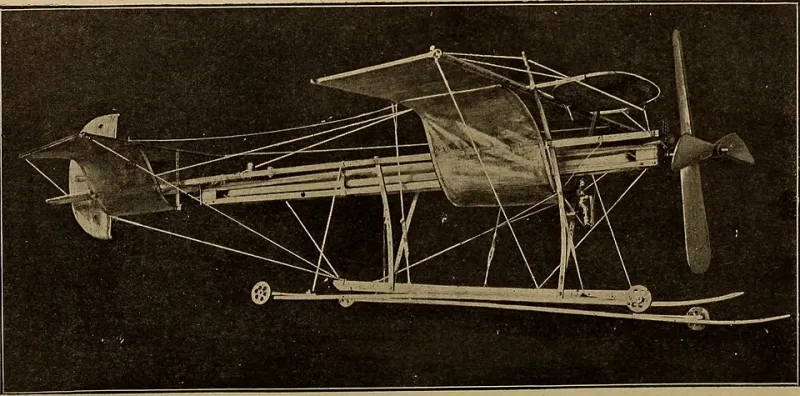
Photo: Bond, A. Russell (Alexander Russell), 1876-, No restrictions, via Wikimedia Commons
Every club has a version of this scene. It is a Tuesday night in a village hall somewhere between the 3D printer and the tea urn. The local model shop shut at four, the postman has brought nothing but a pizza leaflet, and someone is holding a fuselage with a missing 3mm clevis. The build stalls. Then another member rummages in a plastic tub and produces the exact part. Ten minutes later the model is back on the board and the kettle goes on.
That is the moment a spares drawer earns its place. Not as a miniature model shop, and not as a museum of everyone's cast-offs, but as a small circulation system with a lid. Get the rules right and it keeps winter builds moving when the shops are shut and the post is late. Get them wrong and you end up with a drawer full of odd collets, three people who feel owed something and one person who quietly stops contributing.
Start With What Breaks, Not What Impresses
The temptation is to fill the box with things you are pleased to get rid of. Resist it. A useful club drawer is built around the boring failures that stop a build: propellers in the club's common sizes, collets and prop adapters, servo horns, clevises, M3 bolts, washers, heat-shrink, hook-and-loop tape, a few lengths of piano wire and the odd pushrod inner. Add small rubber bands, self-tapping screws and a handful of nylon spacers. None of it is glamorous. All of it gets a model finished on a night when nothing else can.
A good starter stock costs about the price of two club raffle prizes. Ask members to bring duplicates from their own clear-outs, but be specific: 'anything useful in small sizes' produces a box of mystery. 'Props in 8x4, 9x5 and 10x6, plus M3 hardware and clevises' produces a drawer that works.
The Box, the Card and the Tin
Use one clear, labelled Really Useful Box or a compartment case, not a carrier bag of destiny. Keep it in the same place every week and put a laminated inventory list inside the lid. The list does not need to be perfect. It needs to be visible.
The sign-out card is the heart of the thing. A plain index card and a pencil is enough: date, name, part, quantity, and a tick box for 'replaced or paid'. A small notebook works too. The point is not surveillance. The point is that everyone can see the drawer is a shared resource rather than a lucky dip. If someone takes the last 4mm collet, the next person knows why it is gone.
Pair the card with a tin. A biscuit tin is traditional. If a member cannot replace a part like-for-like, they put in the current shop price or a fair estimate. That money buys replacements at the next swapmeet or online order. It keeps the drawer honest without turning a club night into a committee hearing.
A Replacement Rule People Can Live With
The rule should be simple enough to say in one breath: take what you need, replace it within a month, or put the price in the tin. For cheap consumables — washers, heat-shrink, rubber bands — use the handful rule. If you take a handful, bring a handful back when you next restock. Do not count individual washers. Nobody joined a model club to do double-entry bookkeeping.
For props, collets and clevises, like-for-like is fair. If you borrowed a 10x6 electric prop and your model is now flying a 10x7, bring the 10x6 back or put the difference in the tin. If a part has been in the drawer for two years and nobody can remember its origin, it is not a debt. It is stock. The drawer keeper can write it off at the audit.
What Stays Out
A spares drawer is not an insurance policy for expensive gear. Leave out receivers, ESCs, motors, LiPos, chargers, transmitters and anything with a serial number or a fire risk. Leave out personal tools you would miss. Leave out the good carbon prop you are keeping for a special model. If you would feel a pang when it walked out of the hall, it does not belong in the communal box.
Also leave out anything that needs a conversation about safety. A borrowed clevis is a small favour. A borrowed receiver is a test flight waiting to become a dispute.
The Ten-Minute Audit
Once a month, before the chairs go away, tip the drawer onto a table and spend ten minutes on it. Match the sign-out card to the contents. Bin the cracked props, straighten the bent pushrods if you can, and put a note in the club WhatsApp group about what is low. Rotate the drawer keeper role so it does not become one person's unpaid job. The audit is not about catching people out. It is about keeping the drawer useful enough that people trust it.
A spares drawer will never replace the local shop, and it should not try. What it can do is turn a stalled Tuesday into a finished aileron, and a rummage in a tub into a conversation about how someone else solved the same problem. That is worth a few M3 bolts and a biscuit tin.