Paperwork, Props and the Plymouth Ferry: Flying a Model at a European Club in 2026

There is a moment, usually on the ferry or in the queue for LeShuttle, when the romantic idea of flying at a continental club meets the reality of a folder full of paperwork. The model is in the car, the transmitter is charged, and you are quietly wondering whether your UK insurance means anything in France, whether the LiPos should be in the cabin or the boot, and whether anyone will mind you asking to fly with a 35MHz crystal set that was fashionable when mobile phones had aerials.
The good news is that a model trip across the Channel is entirely manageable in 2026. It just rewards a bit of bench-style preparation. Treat it like a pre-maiden: check, double-check, and do not assume that last year’s rules still apply.
Start with the invitation, not the itinerary
Before you book anything, get a proper invitation from the club you plan to visit. Not a vague “sure, pop down” from a forum thread, but an email naming the dates, the strip, the flying times and any guest fee. Ask what insurance they require, whether they need a copy of your certificate, and whether the club has noise limits, no-fly windows or restrictions on IC models, turbines or anything over a certain weight.
It also helps to ask about the strip itself. Is it grass, tarmac or a postage stamp with a shed? Are there trees on the approach, a ditch on the overshoot, or a local rule about landing direction that is not obvious from Google Maps? A club that welcomes visitors will usually appreciate being asked. A club that does not answer is a club you should probably leave for another year.
Insurance that actually travels with you
If you fly under a UK association such as the BMFA, read the small print on overseas cover before you assume anything. Print the certificate and keep a PDF on your phone. Some European clubs want proof of third-party liability insurance before you even open the boot; others will accept a UK policy, and some may ask you to join the local federation or take out local cover.
The key is to ask the host club in advance, not to arrive and hope. Post-Brexit, “it was fine ten years ago” is not a plan. Make sure your policy is in date for the whole trip, and check whether it covers the type of model and the kind of flying you intend to do. If you are taking a jet, a large scale model or anything with a serious weight, pick up the phone rather than relying on a website summary.
The model’s own paperwork
Customs is rarely dramatic for a hobbyist with one or two models, but it is not nothing. The UK and the EU are separate customs territories, so keep the story simple and truthful: these are your personal models, used for hobby flying, and they are going home with you. Carry a simple inventory with photos, approximate values and any serial numbers. Keep receipts for expensive gear if you have them.
If you are taking a van full of models, spares and tools, it is worth checking whether a temporary export document or carnet is appropriate for your circumstances. For most club flyers with a car boot and a couple of airframes, that is overkill, but do not mistake “probably fine” for “definitely fine” if you are travelling with a lot of kit. Also leave the workshop clutter at home. A box of random tools and unlabelled bottles invites questions you do not need.
IC fuel is its own headache. Do not casually sling a jerry can in the car and hope. Check carrier and border rules, and consider buying fuel locally or arranging it through the host club. The same goes for any aerosols, solvents or adhesives that might be classed as dangerous goods.
LiPos: cabin, terminal voltage and a healthy respect
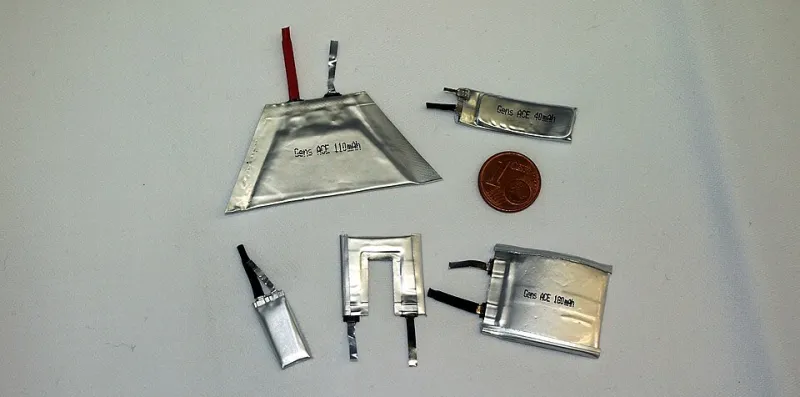
For air travel, assume spare lithium batteries go in the cabin, not the hold. They should be protected against short circuits, ideally in individual fire-resistant bags, with terminals taped or capped. Most model packs fall under the common Watt-hour limits, but “most” is not “all” — check your airline’s current rules and the Watt-hour rating on the pack. Some carriers want prior approval for larger batteries, and rules can change between seasons.
Store packs at storage voltage, label them clearly, and keep them cool and secure. If you are driving, do not leave them baking in a hot boot on a French motorway in July. A cool box and a bit of common sense go a long way.
The car, the border and the bits people forget
If you are driving, check the current requirements for your route rather than relying on a dog-eared checklist from the glovebox. That means passport validity, any current entry-system requirements, vehicle documents, MOT, breakdown cover and insurance. Your insurer will confirm whether a green card is needed; many policies no longer require one, but guessing is not a strategy. Pack the UK sticker, headlamp converters, hi-vis vests and warning triangle as required, and check the latest rules for the countries you are crossing.
For the model, keep a photo of it packed and unpacked. If something gets damaged or delayed, you will be glad of the evidence. And keep the transmitter, charger and batteries accessible if you are flying, because security may want a look.
Frequencies, airspace and local habits
2.4GHz is the common language almost everywhere, but do not assume every club is the same. Ask about frequency control, telemetry rules and whether they still use a pegboard. If you fly legacy 35MHz, check the local channel allocations before you pack the crystals — UK frequencies do not automatically translate into a welcome on the continent. The same applies to any long-range or video gear: ask first, fly later.
Airspace is the other big one. A club strip may sit under a local restriction, near an airport, or in a area with a height limit you did not spot on the map. Ask the club about local NOTAMs, geofencing and any registration or competency requirements. UK operator IDs are not a magic passport; check what the host country expects.
At the strip: be the visitor you would want
Introduce yourself, show your insurance, and ask before you assemble. Watch how the locals run the patch: where they stand, how they call, when they taxi, and how they handle a dead model on the runway. Respect the noise limits and the neighbours, keep the pits tidy, and do not monopolise the sky. A box of decent biscuits in the car is never a bad idea, but good manners are the real currency.
Fly within your comfort zone. A new strip, a different wind and a long drive home are not the day to prove a point. If the conditions are marginal, save it. The model will still be there next year.
The return leg
Before you leave, thank the club properly and ask what they would like you to do differently next time. On the way home, keep the batteries cool, the model secure and the paperwork together. A short note in your phone — strip conditions, local rules, who to contact — is worth its weight in balsa when you plan the next trip.
A European club visit is one of the best things you can do with a model aircraft. It is also a reminder that our hobby runs on courtesy, preparation and a certain amount of patience. Do the checklist, keep it friendly, and the Channel hop becomes what it should be: a good day out with toy aeroplanes.