Before You Throw It Off the Edge: Reading a British Slope From the Car Park
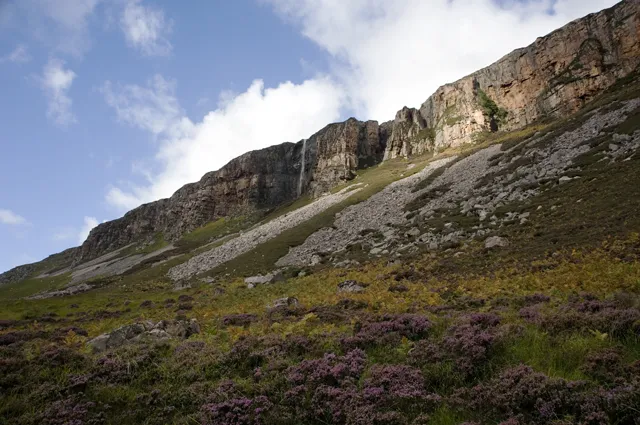
Photo: Tom Richardson , CC BY-SA 2.0, via Wikimedia Commons
Slope soaring in Britain is a branch of meteorology practised with a transmitter in one hand and a sheep staring at you from the other. The forecast might say 14 mph south-westerly, but the car park will have its own opinion. Before you walk up, rig and launch, spend five minutes reading the hill. It is cheaper than a bin bag and a long walk.
The car-park scan
Start with the wind at ground level. A windsock is a luxury; most UK slopes do not have one. Use a flag, a line of trees, smoke from a kettle, ripples on a puddle, the way grass bends, or the direction the sheep are facing. Livestock often stand with their backs to the wind, which is useful when the nearest anemometer is in your pocket and the nearest flag is a mile away.
Then judge strength. Beaufort is good enough: 10 mph moves leaves and light flags; 15 to 20 mph raises whitecaps on reservoirs and makes the grass hiss; 25 mph makes walking uphill a negotiation. The slope needs to face within about 20 to 30 degrees of the wind. More off-angle than that and you get a narrow, punchy lift band, rotor at the ends and a model that feels like it is flying in a washing machine.
Look behind the ridge before you look at the sky. Rotor is the dirty air that tumbles down the back of the hill, and it can fold a model on launch or dump it on the back slope. Signs include trees behind the crest thrashing, gusts coming down the back, a hard line of turbulence, dust or leaves lifting where they should not, and birds giving the area a wide berth.
What the app misses
A forecast is a grid. A hill is a place. A tree line can create a rotor zone; a gap in a hedge can accelerate the wind; a rounded ridge may be gentle; a sharp edge may be punchy. Local knowledge is club knowledge. If a member tells you the right-hand end gets squirrelly after midday, believe them.
Coastal slopes add another layer. A sea breeze can switch direction as the land warms. Morning offshore can become afternoon onshore, and the wind can back or veer by 60 degrees in half an hour. If the lift goes light and sloppy, then suddenly arrives from a new angle, land and re-read the hill. Do not chase the band with a model that is already trimmed for the old wind.
Cloud signs help. Steady cumulus and a clean horizon suggest organised air. Lenticular clouds suggest strong winds aloft. Low cloud sitting on the ridge means no visual horizon and no fun. A dark shower line can bring a gust front, and a gust front on a slope is not a trimming opportunity.
Hazards are part of the scan. Sheep, cows, walkers, dogs, fences, footpaths, National Trust signs, power lines and model-destroying rocks all matter. Give livestock room. Do not launch over people. If a sheep is staring at you, it may be guarding the only flat patch.
Three field scenarios
1. The clean lift band. A south-westerly at 15 to 18 mph, square onto a clean grass ridge, cumulus tearing past and no rotor behind. Sheep grazing on the back. This is the day to rig, range-check and launch into lift. Fly big beats, keep the model out front and land before the wind drops.
2. The sea-breeze switch. Morning is light offshore. By early afternoon the wind has gone onshore but is 50 degrees off the face. The lift is patchy on the left and rotory on the right. The temptation is to keep flying because the model is still in the air. The better move is to land, have tea and wait. If the wind settles onto the face, go again. If it keeps swinging, pack up.
3. The day that should have stayed in the bag. Twenty-five gusting 35, 40 degrees off the face, low cloud, rain coming, sheep hunkered down and walkers on the crest. The hill is telling you no. A slope model can be replaced; a walker cannot. Go home, fly the sim, or spend an hour on the bench.
The sixty-second pre-launch scan
Before every launch, run the same check. Wind at the launch point. Wind behind the ridge. Sky and horizon. People and livestock. Landing area. Controls, rates and failsafe. Range check. If two items are marginal, do not launch. If one item is serious — rotor, walkers, low cloud — do not launch at all.
Slope flying rewards patience more than bravery. The best pilots on a British hillside are not the ones who launch first. They are the ones who look at the trees, the sheep and the clouds, decide the hill is ready, and then make it look easy.