Twelve Lines on a Card: The Pre-Maiden Routine That Pays You Back

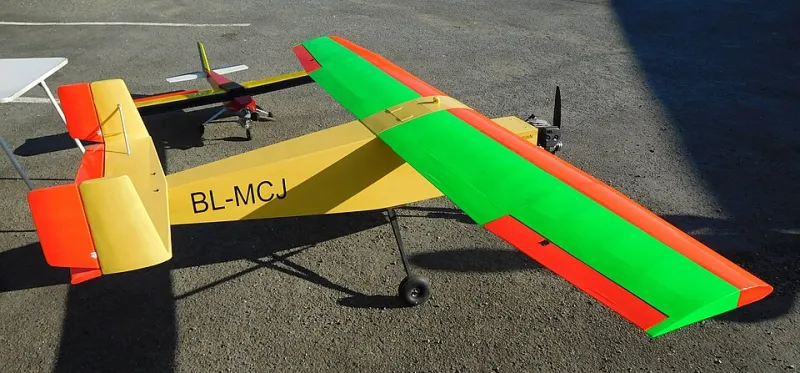
Photo: Sérgio Valle Duarte .mw-parser-output .messagebox{margin:4px 0;width:auto;border-collapse:collapse;border:2px solid var(--border-color-progressive,#6485d1);background-color:var(--background-color-neutral-subtle,#fbfcff);color:var(--color-base,#202
The maiden is not really a test of the aeroplane. It is a test of whether you did the dull things in the right order, on the day, with cold hands and someone chatting in your ear. Most of the maidens that go wrong at UK strips do not go wrong because the design was bad. They go wrong because a clevis was on the wrong hole, a receiver pack was on its fourth season, or the failsafe had never actually been demonstrated.
So write it down. Not in your head — on a card. Once it exists as a physical object in the flight box, it stops being advice and starts being procedure.
Why a card beats a memory
A mental checklist is fine until the wind picks up, the transmitter strap tangles and your mate arrives with a new engine to show you. At that point your brain quietly drops item four and nobody notices until the model is at 300 feet doing something you didn't ask for.
A card is also honest. If you can't tick a line, you haven't finished the job. That is a much better feeling than discovering it in the air.
The twelve lines
Print them in a big sans-serif, no smaller than 11pt, and keep the wording blunt.
- Balance point, measured as flown. Fuel tank state or battery position exactly as it will be in the air. Fingertips are acceptable on a 2kg sport model; a cheap CG machine is better. Mark the point with a strip of tape at the wing root so the next person can check without the manual.
- Weight noted down. All-up, ready to fly. Write the number on the card. It is the only way you will ever notice that a rebuild has put 90g on the tail.
- Battery health, not just voltage. Receiver pack resting voltage, then voltage under a 1A load. Flight pack internal resistance per cell if your charger reports it. A pack that sags is a pack that will brown out your receiver at the worst moment.
- Every surface, both directions. Ailerons, elevator, rudder, flaps, retracts, throttle. Both directions, on the rates you will actually fly, on the model memory you will actually use — not the one from the aeroplane you flew last week.
- Throws written as numbers. Not "low rates" but "aileron 8mm up, 6mm down". If you cannot write a number, you have not measured it.
- Failsafe demonstrated. Prop off or model restrained, then switch the transmitter off. Throttle to cut, surfaces to a gentle hold. Watch it happen. Do not assume it.
- Range check to the manual. Most 2.4GHz sets have a reduced-power mode; use it. Model restrained, aerial orientations varied, thirty to fifty paces as specified. Marginal is a fail.
- Power run-up under restraint. Ten seconds at full power: watts and amps against the spec for electric, needle and tank plumbing for IC. Check the spinner, the prop balance and whether anything gets hot enough to smell.
- Hardware pull test. Hinges, clevises and keepers, wheel collars, canopy latch, wing bolts, tailplane bolts. Give each one a firm tug. It takes ninety seconds and it finds the one you forgot.
- Weather window and site rules. Your own crosswind limit, the gust spread, the sun angle, and whether the strip is already busy. Insurance current, frequency or protocol followed, and someone told you are taking off.
- Pilot and helper. Who is holding the model, who has the flight box, who is calling the landing. If it is a genuine first flight, a buddy lead and an instructor is not a lack of confidence — it is a spare pair of eyes.
- The first ninety seconds, planned. Climb out, one circuit, three clicks of trim maximum, land. The maiden is a trimming flight, not a display.
The abort list is the important half
Turn the card over and write the reasons you will walk away. Say them out loud at the strip so nobody has to be brave.
- Failsafe not demonstrated, or does not do what the manual says.
- Any surface moving the wrong way, even slightly, even on a rate you don't plan to use.
- Range check marginal.
- Receiver pack below the figure you wrote on the card, or sagging under load.
- Wind above your stated limit, or gust spread wider than half the steady wind speed.
- No helper for a genuine first flight.
- You are rushing because the light is going.
None of those are judgement calls. That is the point. A written abort list protects you from your own optimism at exactly the moment optimism is most expensive.
Wording that survives a British strip
Grass strips in this country are rarely generous. A crosswind limit stated as a number in mph is worth more than "I'll see how it feels", because "how it feels" is usually assessed while holding a model and wanting to fly it.
Two phrases earn their place on the card. The first is "one circuit, then land" — it stops the maiden quietly becoming a second flight with a model that has not been trimmed. The second is "no maiden on a busy Saturday". A full car park, three conversations and a queue for the strip is not the environment for a first flight, however lovely the weather looks.
If your strip has a tree line upwind, add a note about rotor on the approach. If it drains badly after rain, add a note about the soft patch. Local knowledge on a card is worth more than general advice on the internet.
Laminating it, and where it lives
A6 is the right size — big enough for twelve lines at readable type, small enough to live in the flight box lid. Print, trim to size, laminate, punch a corner and cable-tie it to the box handle. If you are tidy, put the airframe numbers on the back: weight, CG, throws, battery, timer setting, and the date of the last range check.
Then use it. Tick it with a dry-wipe pen. Replace the card when it goes tatty. The routine only works if it is easier to follow than to skip, and a card tied to the handle is very hard to skip.
One last thing: first flights are cheaper when the card is filled in the night before in the workshop, with the kettle on, rather than at the strip with the engine running. Do the bench half at home. Keep the field half for the field. That way the twelve lines take four minutes, and you spend the rest of the morning actually flying.